The Kubernetes DR Gap: Why You Can’t Protect What You Don’t Understand
Most Kubernetes clusters aren't as "DR-ready" as their teams think. We often mistake having a backup tool for having a recovery strategy. But here is the hard truth: You can't design a disaster recovery plan properly if you don't understand your current cluster state.
The Problem: The "Blind" Recovery Strategy
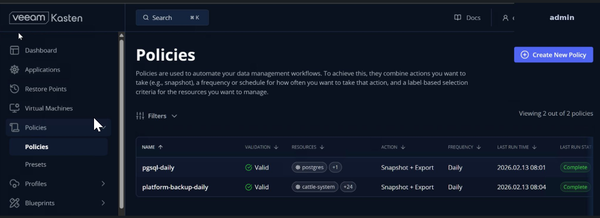
In many organizations, the DR conversation starts and ends with, "Do we have Velero or Kasten running?" While those tools are essential for the heavy lifting of data movement, they don't necessarily tell you if your environment is architecturally sound for a recovery.
Common gaps I see include:
Invisible Dependencies: Services relying on external resources not captured in snapshots.
Configuration Drift: Differences between the primary and recovery sites that cause restores to fail at 3:00 AM.
False Confidence: A "Green" backup status that masks a fundamental failure in recovery logic.
Introducing: K8s Recovery Visualizer
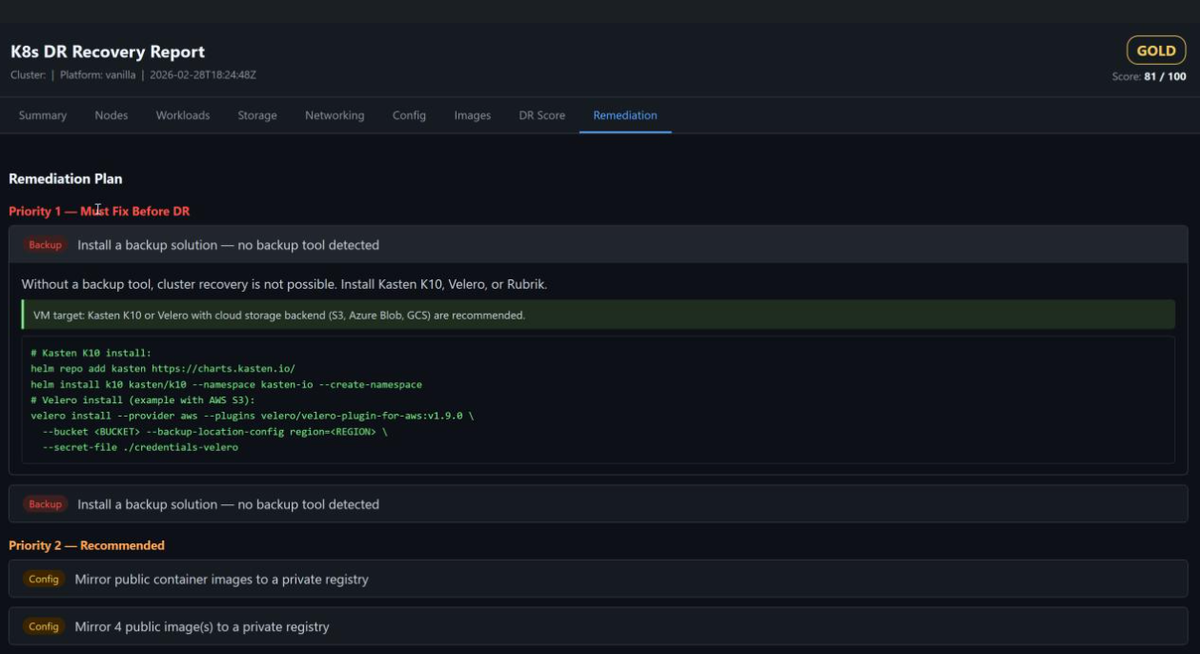
To bridge this gap, I built K8s Recovery Visualizer. It’s a Go-based tool designed to answer one specific, high-stakes question: How ready is this cluster for DR… really?
It’s important to note that this isn’t a replacement for your backup vendor. Instead, it’s a diagnostic layer that helps architects and engineers assess risk before they start building or testing DR workflows.
Key Features:
Environment Discovery: Automatically maps out the recovery-relevant configuration of your cluster.
Confidence Scoring: Provides a data-driven look at how likely a recovery is to succeed based on current state.
Failure Detection: Highlights potential "gotchas" that would break a restore mid-way.
Historical Trend Tracking: Watch your DR readiness improve (or degrade) as your cluster evolves.
Perspective: It’s not about replacing the tools that do the work; it’s about providing the map so you know the work is being done correctly.
Where is your biggest gap?
Building this tool has highlighted just how many "hidden" risks exist in production environments. I’m curious to hear from other engineers—what is the most common DR gap you encounter? Is it missing backups, a lack of a tested restore process, or something else entirely?
This project is under active development, and I’d love for the community to kick the tires and provide feedback.
Explore the project on GitHub: https://github.com/eblackrps/k8s-recovery-visualizer